.png)


7mins
October 12, 2026
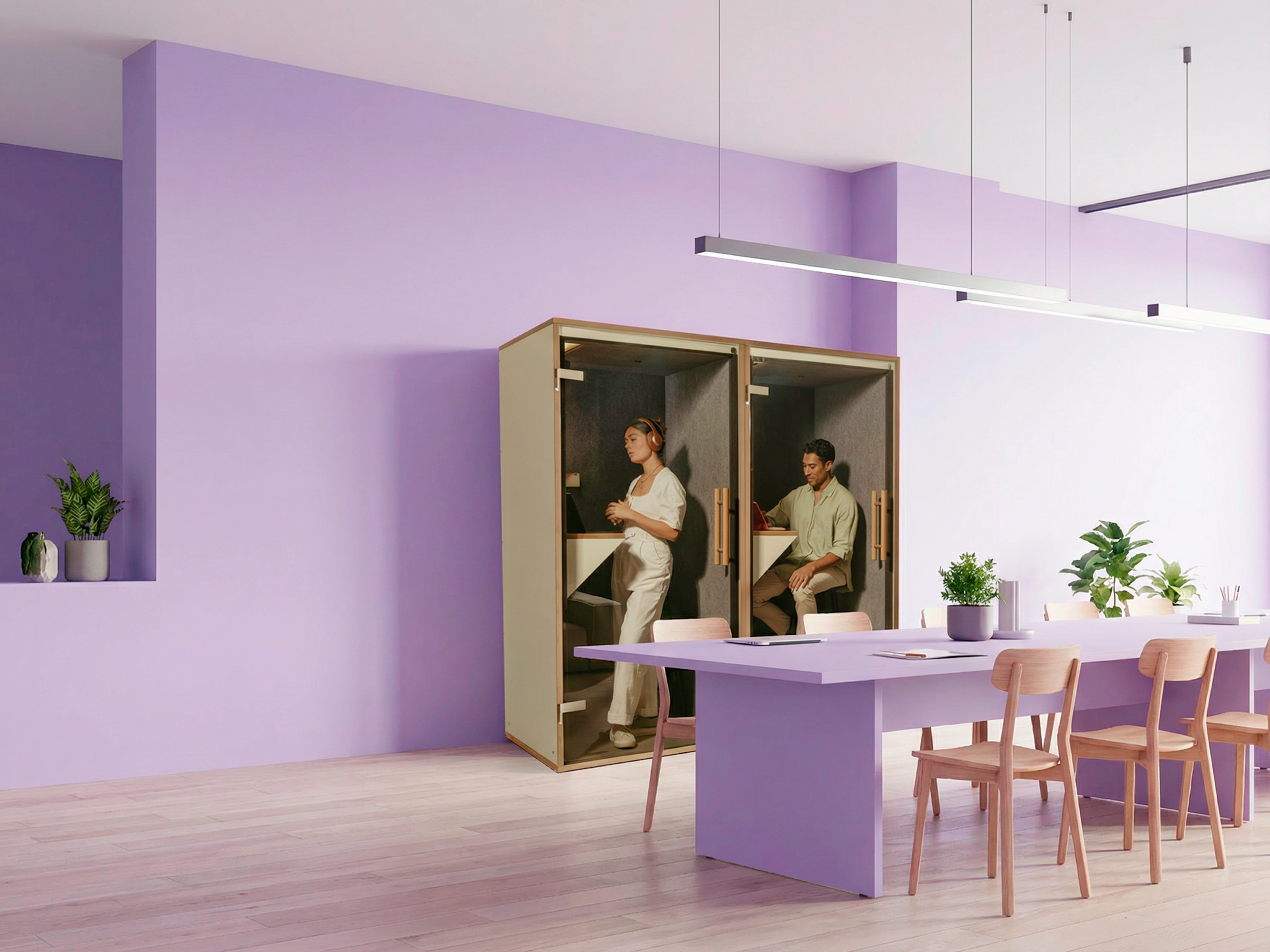
Meeting booth for 2 people: one booth for 2, 3 or 4

.jpg)

.svg)
Work has changed. Offices haven’t fully caught up.
Between hybrid setups, constant video calls, and open-plan layouts, most workplaces today struggle with the same problem: too much noise, not enough space to focus.
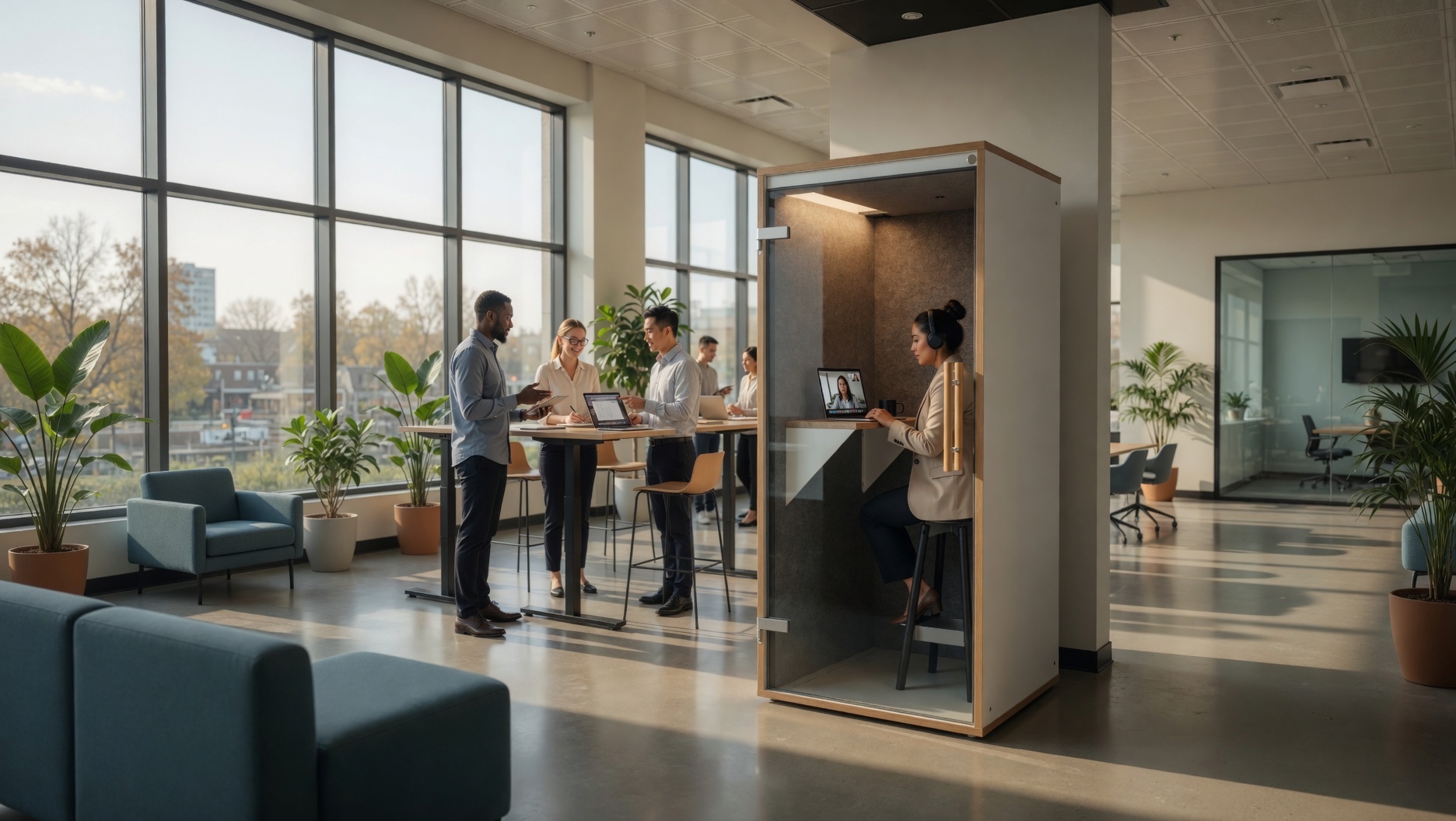
Instead of redesigning entire offices, many companies are solving this with a simpler approach: adding acoustic pods where they’re actually needed.
Most offices try to serve multiple purposes at once:
The result is compromise. People take calls at their desks, meetings happen in hallways, and deep work becomes difficult.
Acoustic pods introduce dedicated micro-spaces inside the office:
They don’t replace the office. They make it usable again.
At mute-labs, the focus is not on adding features for the sake of it.
The goal is simple: create a space where people can actually get work done.
That means focusing on three things:
Not just reducing noise, but making sure:
Pods are not used for 2 minutes. People stay in them.
So they need:
No construction, no complexity.
Just:
Instead of one solution, offices need different types of spaces.
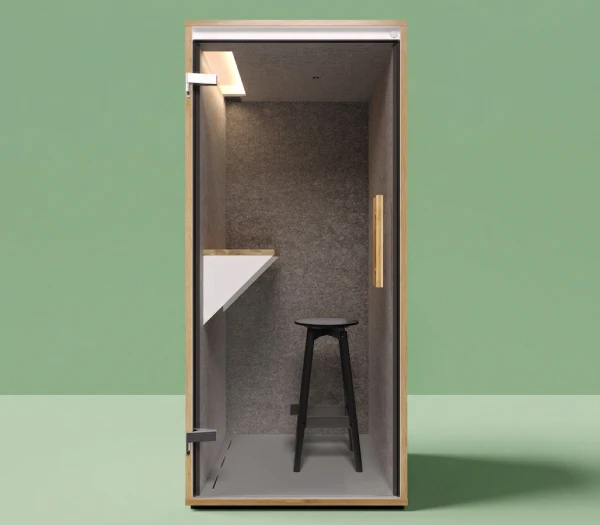
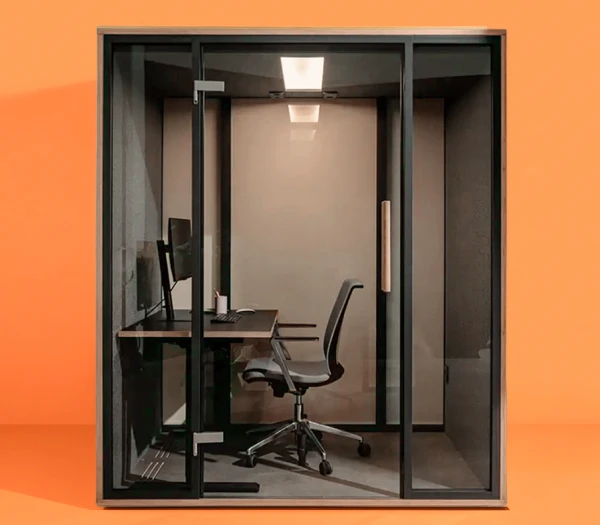
A compact 1-person pod gives you a quiet place to:
A slightly larger setup allows for:
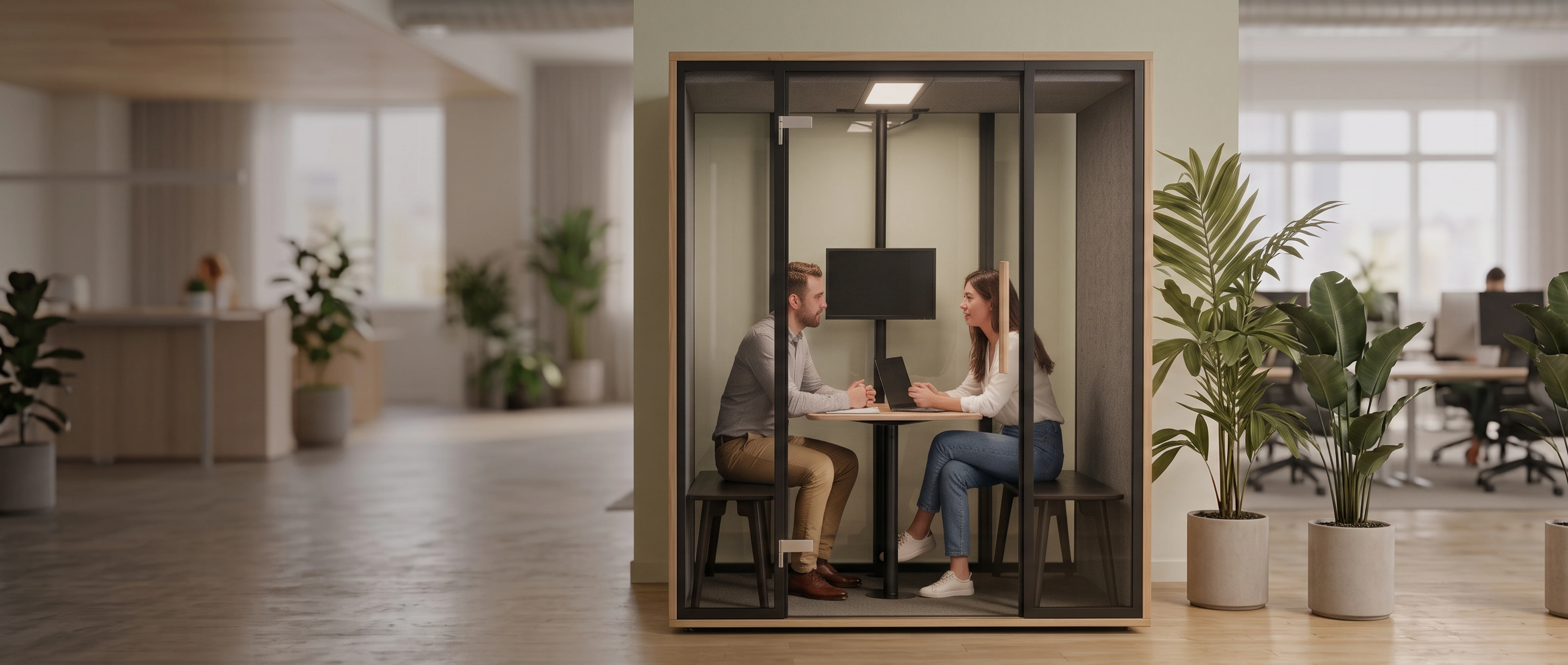
2-person pods are ideal for:
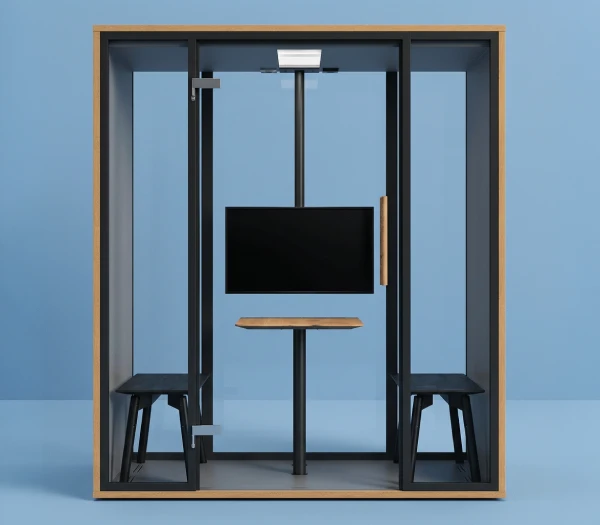
Small meeting pods help with:
The key is not the product.
It’s matching the space to the behavior.
Open spaces were designed for collaboration, but they often come at the cost of focus.
Instead of trying to silence the entire office, pods create targeted quiet zones where they are actually needed.
From client calls to internal discussions, many conversations require discretion.
Pods allow teams to speak freely without:
A common issue:
Pods take pressure off meeting rooms by handling:
Teams grow, layouts change, offices move.
Unlike fixed construction, acoustic pods:
They are not just furniture.
They are infrastructure that evolves with your company.
There are many options on the market. Not all of them perform the same.
The key criteria to look at:
Many offices start with acoustic panels or dividers.
They help, but only to a point.
Panels and partitions:
Pods:
If the goal is true usability, pods go much further.
Sustainability in office design is often treated as a question of materials.
But in practice, the biggest impact comes from how long a product is used and how easily it adapts over time.
mute-labs takes a more practical approach.
Instead of creating fixed, short-term solutions, pods are designed to:
This means fewer resources consumed over time and less waste created.
Rather than overbuilding, the idea is simple: create exactly the space you need, only where you need it.
Companies choose mute-labs when they want:
But most importantly: They choose it because it solves a very real problem: giving people a space to think, speak, and focus.


You don’t need to redesign your entire office to improve how people work.
You just need to introduce the right spaces in the right places.
Acoustic pods are one of the simplest ways to do that.
And when done right, they don’t just reduce noise.
They change how the office feels to work in.
.svg)
.svg)

Work has changed. Offices haven’t fully caught up.
Between hybrid setups, constant video calls, and open-plan layouts, most workplaces today struggle with the same problem: too much noise, not enough space to focus.
Instead of redesigning entire offices, many companies are solving this with a simpler approach: adding acoustic pods where they’re actually needed.
Most offices try to serve multiple purposes at once:
The result is compromise. People take calls at their desks, meetings happen in hallways, and deep work becomes difficult.
Acoustic pods introduce dedicated micro-spaces inside the office:
They don’t replace the office. They make it usable again.
At mute-labs, the focus is not on adding features for the sake of it.
The goal is simple: create a space where people can actually get work done.
That means focusing on three things:
Not just reducing noise, but making sure:
Pods are not used for 2 minutes. People stay in them.
So they need:
No construction, no complexity.
Just:
Instead of one solution, offices need different types of spaces.
A compact 1-person pod gives you a quiet place to:
A slightly larger setup allows for:
2-person pods are ideal for:
Small meeting pods help with:
The key is not the product.
It’s matching the space to the behavior.
Open spaces were designed for collaboration, but they often come at the cost of focus.
Instead of trying to silence the entire office, pods create targeted quiet zones where they are actually needed.
From client calls to internal discussions, many conversations require discretion.
Pods allow teams to speak freely without:
A common issue:
Pods take pressure off meeting rooms by handling:
Teams grow, layouts change, offices move.
Unlike fixed construction, acoustic pods:
They are not just furniture.
They are infrastructure that evolves with your company.
There are many options on the market. Not all of them perform the same.
The key criteria to look at:
Many offices start with acoustic panels or dividers.
They help, but only to a point.
Panels and partitions:
Pods:
If the goal is true usability, pods go much further.
Sustainability in office design is often treated as a question of materials.
But in practice, the biggest impact comes from how long a product is used and how easily it adapts over time.
mute-labs takes a more practical approach.
Instead of creating fixed, short-term solutions, pods are designed to:
This means fewer resources consumed over time and less waste created.
Rather than overbuilding, the idea is simple: create exactly the space you need, only where you need it.
Companies choose mute-labs when they want:
But most importantly: They choose it because it solves a very real problem: giving people a space to think, speak, and focus.
You don’t need to redesign your entire office to improve how people work.
You just need to introduce the right spaces in the right places.
Acoustic pods are one of the simplest ways to do that.
And when done right, they don’t just reduce noise.
They change how the office feels to work in.
.svg)
.svg)
.svg)