.png)


7mins
September 15, 2026
Back to the Office: How Spatial Collaboration Works in the Hybrid Workplace

.jpg)

.svg)
Panels soften a room. Booths seal one off.
Panels soak up sound so the office echoes less. Everything sounds calmer. But you can still hear exactly what your colleague is saying two desks away. That's the part that breaks concentration, and it's the part panels don't touch.
A booth blocks sound instead of softening it. A good one cuts around 30 dB — about what a solid interior wall does. A normal speaking voice at 60 dB comes out at 30 dB: quieter than the room around it, so nobody can make out the words.
A proper panel job costs about the same as two booths — and still leaves you with nowhere private to take a call. Booths also start smaller: one unit, from €2,990 or around €71 a month on lease. Panels don't really work in halves.
Space. A booth takes 1 m². But most teams already block a 12–15 m² meeting room so one person can make a phone call. A booth hands that room back — net, you gain space.
Moving. Panels get drilled in. When the lease ends they stay behind as holes in someone else's wall. A booth is an asset: it moves with you and still has resale value.
Scaling. Doubling your panels doesn't halve the noise — the effect flattens out fast. Every extra booth is one more usable private space, every time.
The most common objection to booths is air. It's a fair question, and the answer depends entirely on the model — a cheap booth with a loud fan defeats its own purpose, because you end up with a box you don't want to sit in.
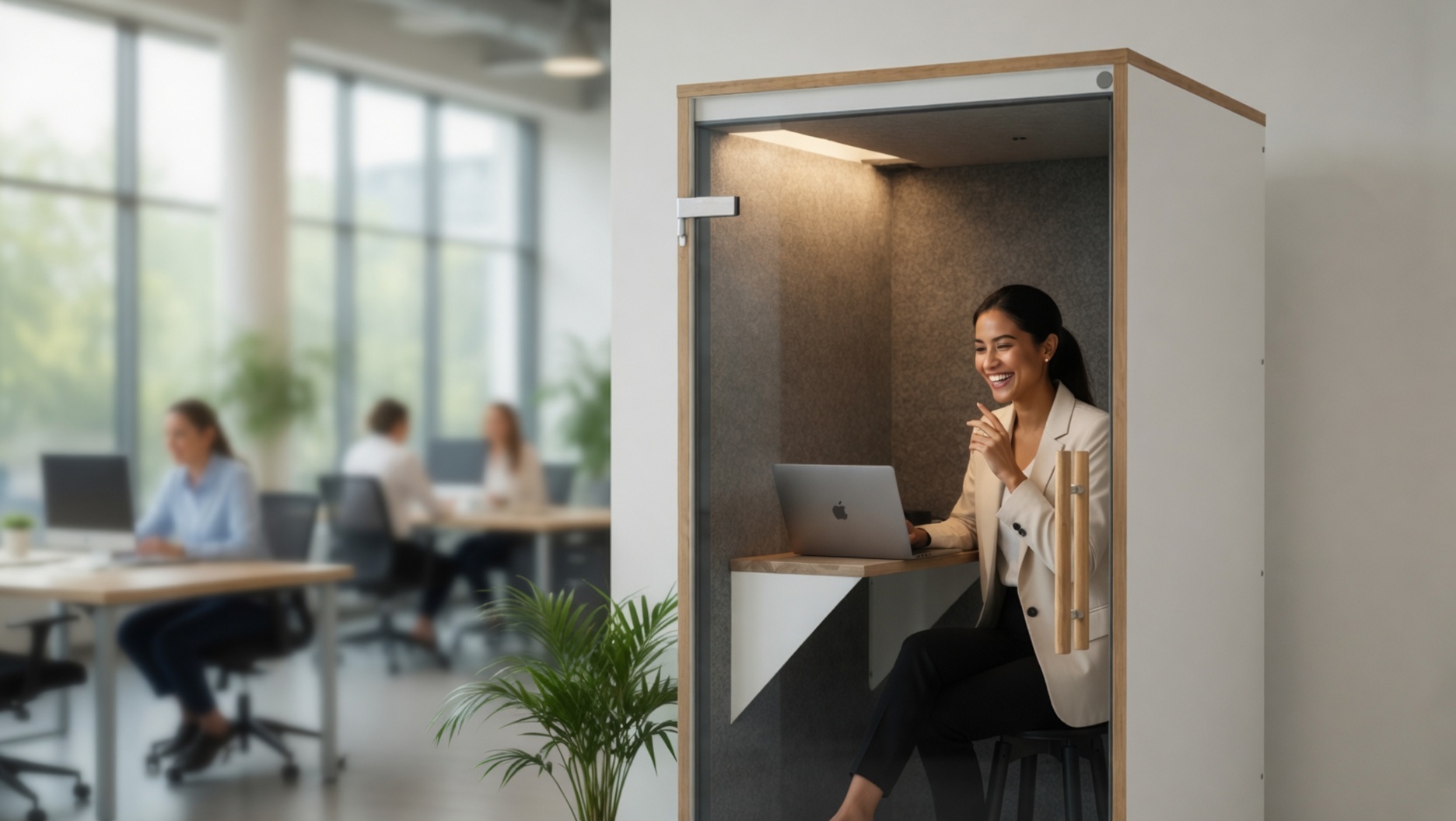
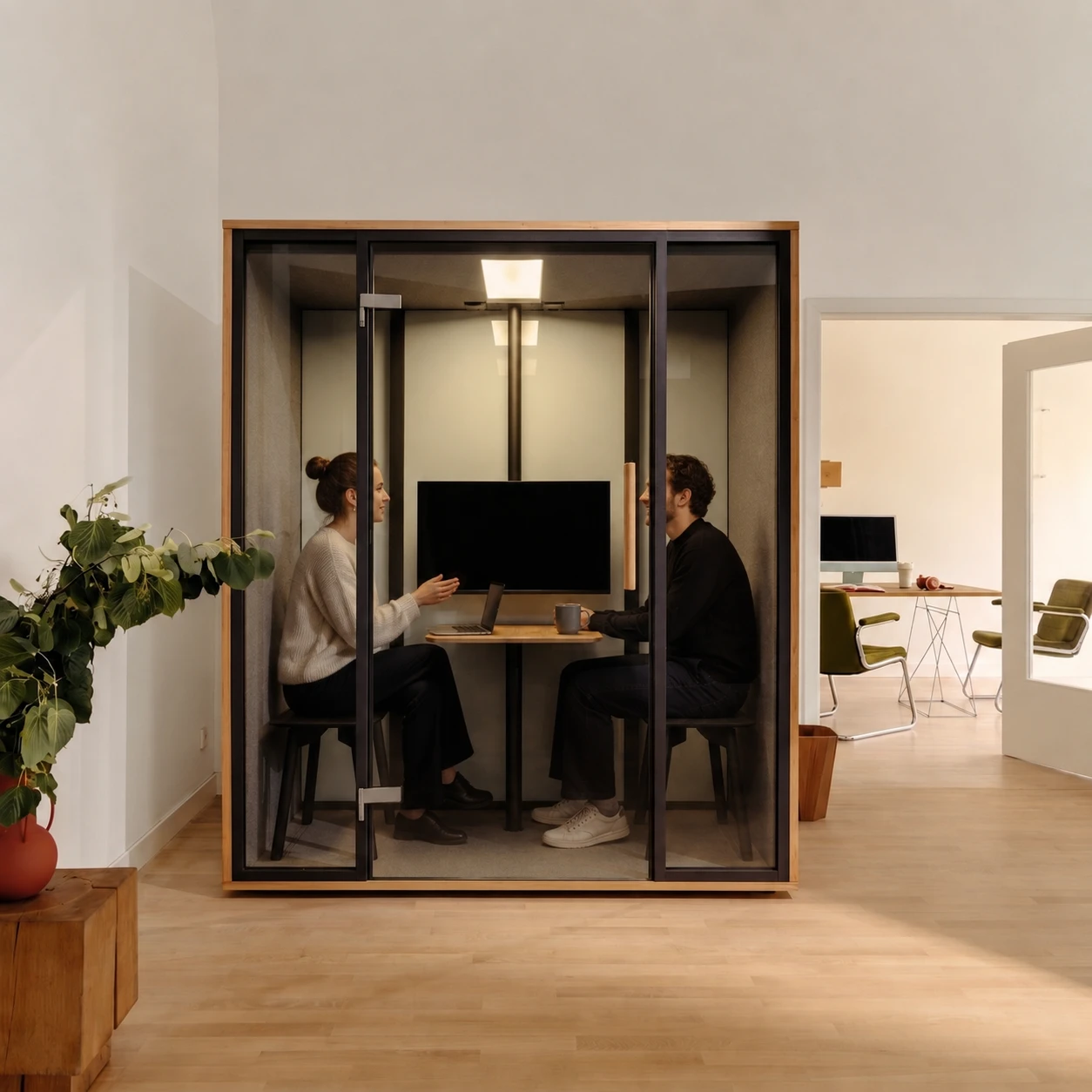
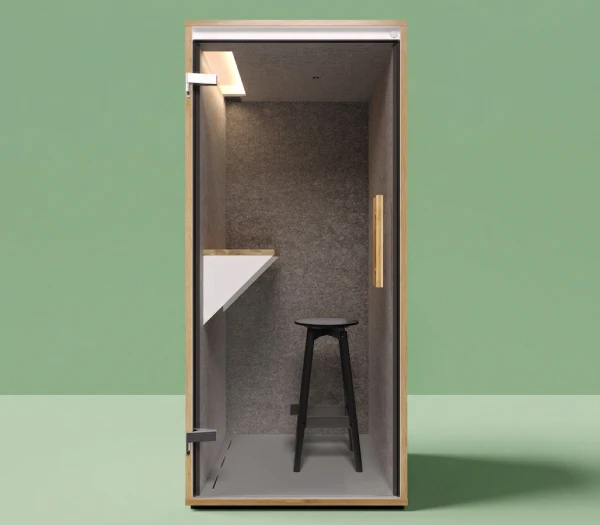
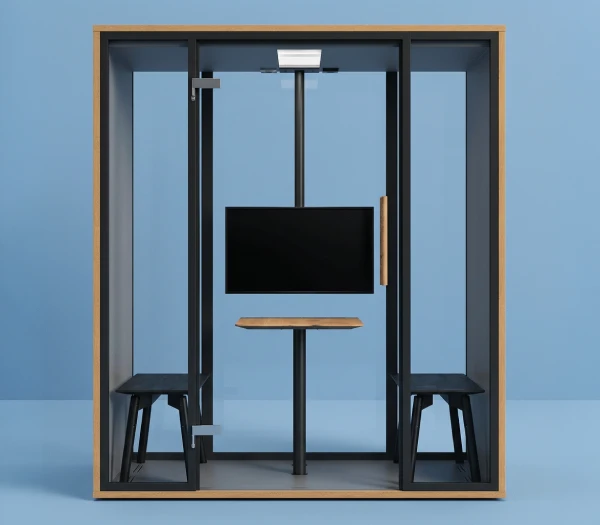
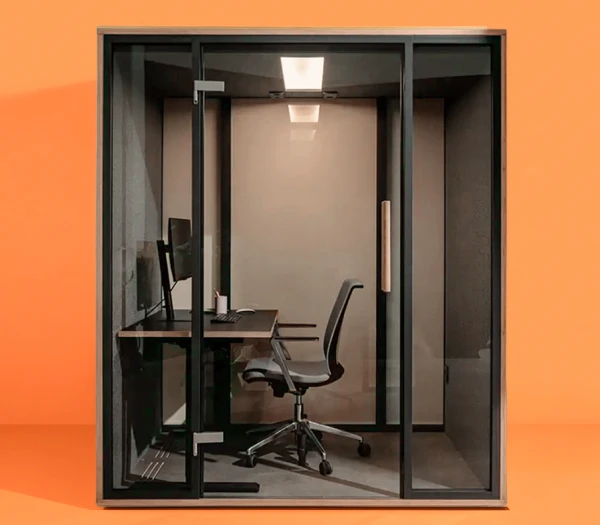
Our booths are built around this. SOLO has silent ventilation with motion-sensor LED lighting: air refreshes the moment you step in, and the booth stays quiet when it's empty. QUATTRO and the Deepwork booth use silent dual ventilation, sized for longer meetings with up to four people. If you're comparing suppliers, ask about the fan's own noise level — not just airflow.
If your complaint is echo rather than privacy, panels are the right buy. A high-ceilinged space with concrete, glass and hard floors where everyone ends up raising their voice is an echo problem. Same for canteens and meeting rooms, where you want people to hear each other clearly inside the room.
But if people step into the corridor to take calls, or camp in a meeting room with headphones on, panels won't fix it — at any quantity.
Do it the other way round and you end up with an office that sounds nicer, the original complaint intact, and no budget left.


Can enough panels replace a booth? No. Panels absorb, booths block. Different job.
Which is cheaper? Per square metre, panels. Per problem solved, the booth.
Is it stuffy inside a booth? Not in a well-built one. Ours ventilate automatically on entry and run quietly enough that you forget they're there.
Can it move with us? Yes — one of the biggest practical advantages over panels in a leased office.
How many booths? About one per 10–15 employees; fewer people per booth for sales and support teams.
.svg)
.svg)

Panels soften a room. Booths seal one off.
Panels soak up sound so the office echoes less. Everything sounds calmer. But you can still hear exactly what your colleague is saying two desks away. That's the part that breaks concentration, and it's the part panels don't touch.
A booth blocks sound instead of softening it. A good one cuts around 30 dB — about what a solid interior wall does. A normal speaking voice at 60 dB comes out at 30 dB: quieter than the room around it, so nobody can make out the words.
A proper panel job costs about the same as two booths — and still leaves you with nowhere private to take a call. Booths also start smaller: one unit, from €2,990 or around €71 a month on lease. Panels don't really work in halves.
Space. A booth takes 1 m². But most teams already block a 12–15 m² meeting room so one person can make a phone call. A booth hands that room back — net, you gain space.
Moving. Panels get drilled in. When the lease ends they stay behind as holes in someone else's wall. A booth is an asset: it moves with you and still has resale value.
Scaling. Doubling your panels doesn't halve the noise — the effect flattens out fast. Every extra booth is one more usable private space, every time.
The most common objection to booths is air. It's a fair question, and the answer depends entirely on the model — a cheap booth with a loud fan defeats its own purpose, because you end up with a box you don't want to sit in.
Our booths are built around this. SOLO has silent ventilation with motion-sensor LED lighting: air refreshes the moment you step in, and the booth stays quiet when it's empty. QUATTRO and the Deepwork booth use silent dual ventilation, sized for longer meetings with up to four people. If you're comparing suppliers, ask about the fan's own noise level — not just airflow.
If your complaint is echo rather than privacy, panels are the right buy. A high-ceilinged space with concrete, glass and hard floors where everyone ends up raising their voice is an echo problem. Same for canteens and meeting rooms, where you want people to hear each other clearly inside the room.
But if people step into the corridor to take calls, or camp in a meeting room with headphones on, panels won't fix it — at any quantity.
Do it the other way round and you end up with an office that sounds nicer, the original complaint intact, and no budget left.
Can enough panels replace a booth? No. Panels absorb, booths block. Different job.
Which is cheaper? Per square metre, panels. Per problem solved, the booth.
Is it stuffy inside a booth? Not in a well-built one. Ours ventilate automatically on entry and run quietly enough that you forget they're there.
Can it move with us? Yes — one of the biggest practical advantages over panels in a leased office.
How many booths? About one per 10–15 employees; fewer people per booth for sales and support teams.
.svg)
.svg)
.svg)