7mins
October 12, 2026
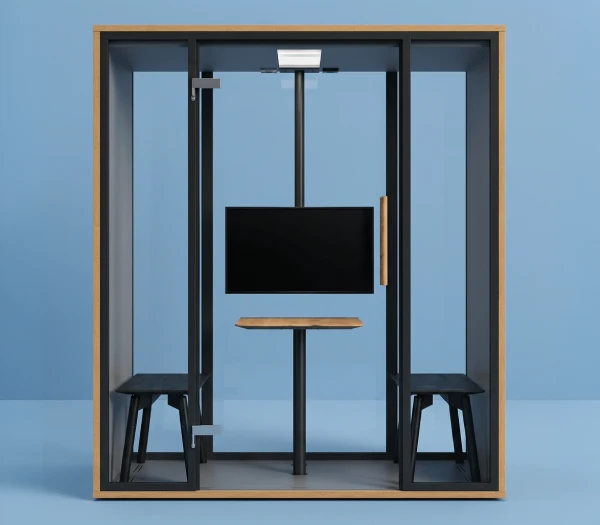
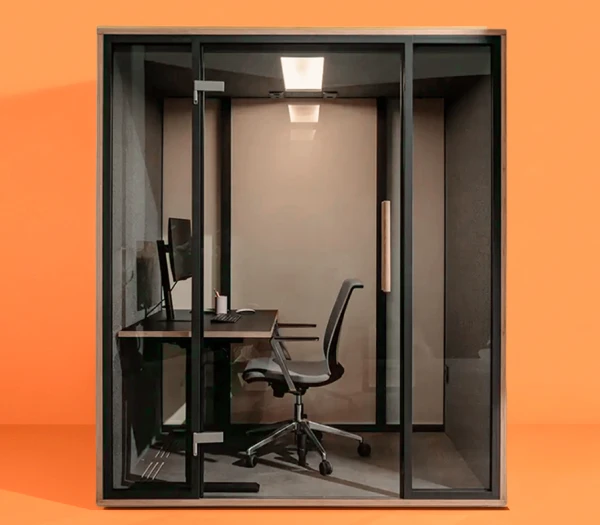
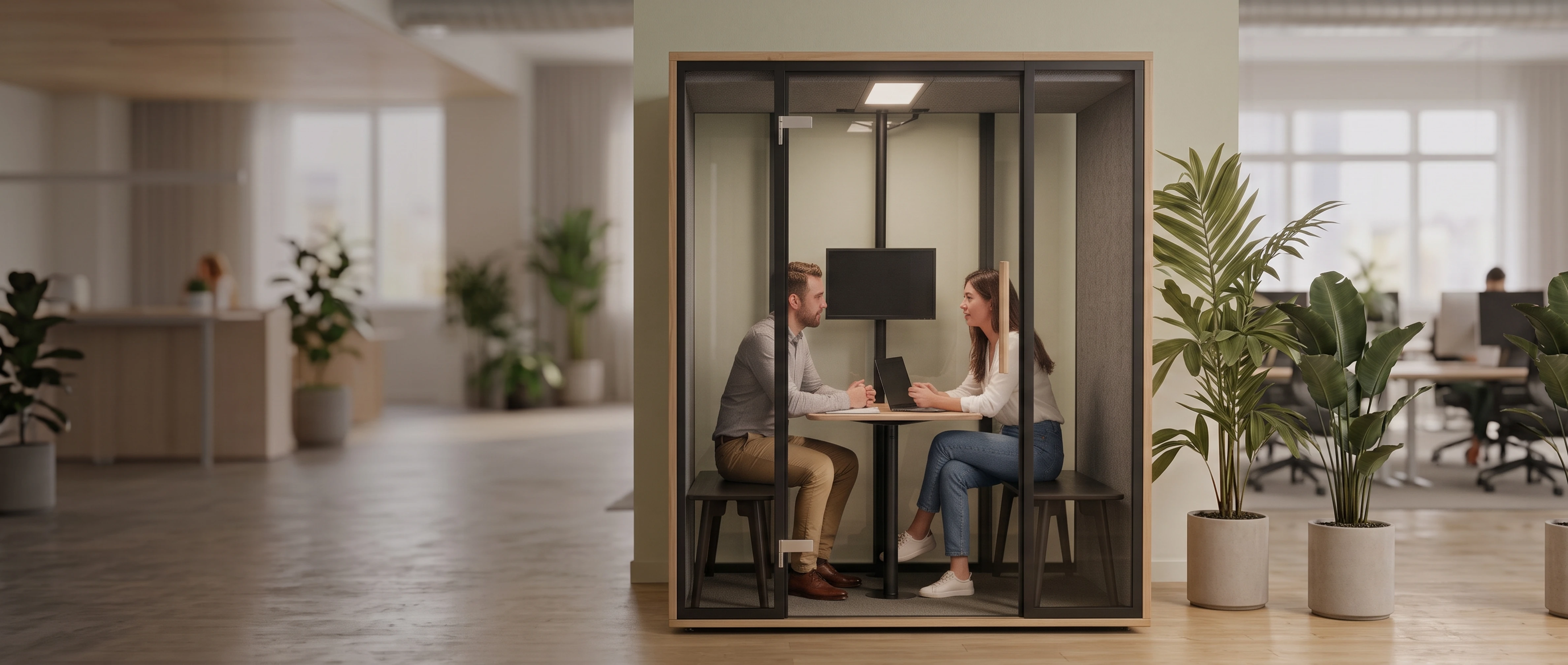
Meeting booth for 2 people: one booth for 2, 3 or 4


Open-plan offices are designed to encourage collaboration, use space more efficiently and bring teams closer together. In reality, however, the opposite often happens: employees feel distracted, focused work becomes more difficult and productive working time is lost.
The numbers are clear:
This is not just frustrating — it is a real business cost.
Short conversations, spontaneous questions or calls at the next desk are part of everyday office life. The problem starts when interruptions become constant.
Especially in open offices, employees often lack the opportunity to briefly retreat. Conversations therefore happen directly at the workstation, video calls take place between colleagues trying to focus and quick alignments move into shared spaces.
The result: focused work becomes the exception.
Particularly critical is what is known as “flow loss”. When someone is pulled out of a focused work phase, it takes time to become fully productive again. This is where the real damage happens.
In addition, there is all the unnoticed time that disappears throughout the day. The impact on productive working time is substantial.
The effects also become visible when comparing office work with working from home.
This is a warning sign for companies. Because when employees need to work from home in order to be productive, the office loses its most important advantage.
At the same time, many companies are currently investing in smaller and more efficient office spaces. The problem: in many cases, the space is optimized — but not the working environment.
More people in less space automatically means:
Without suitable retreat spaces, pressure increases throughout the entire office.
Most open offices do not fail because of collaboration — they fail because of a lack of differentiation.
Employees need different spaces for different tasks:
And these are exactly the spaces that are often missing.
Employees most frequently mention the need for:
Without these options, every activity automatically shifts into the open area — creating even more distractions.
The good news: companies do not need to completely redesign their offices to solve this problem.
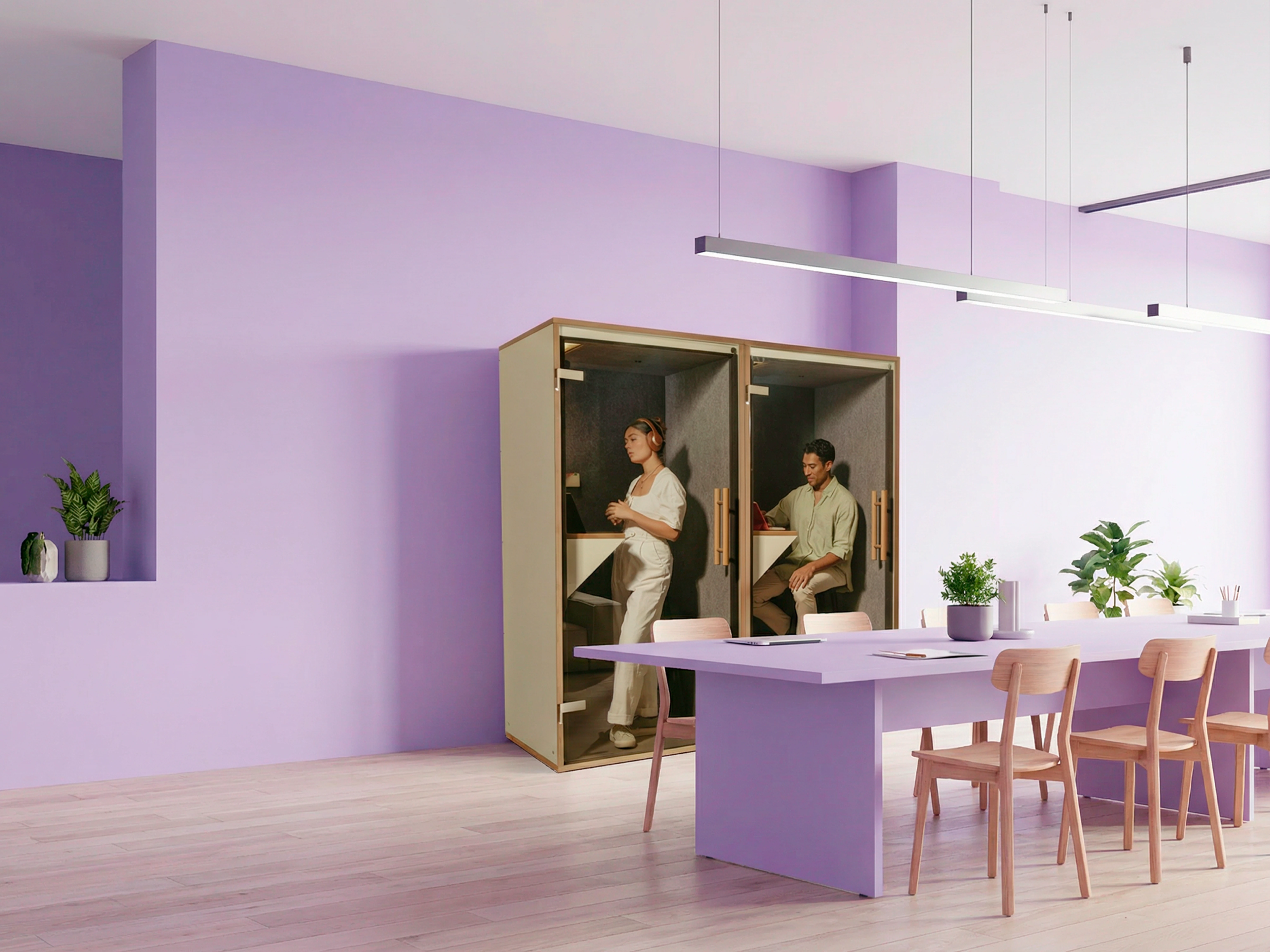
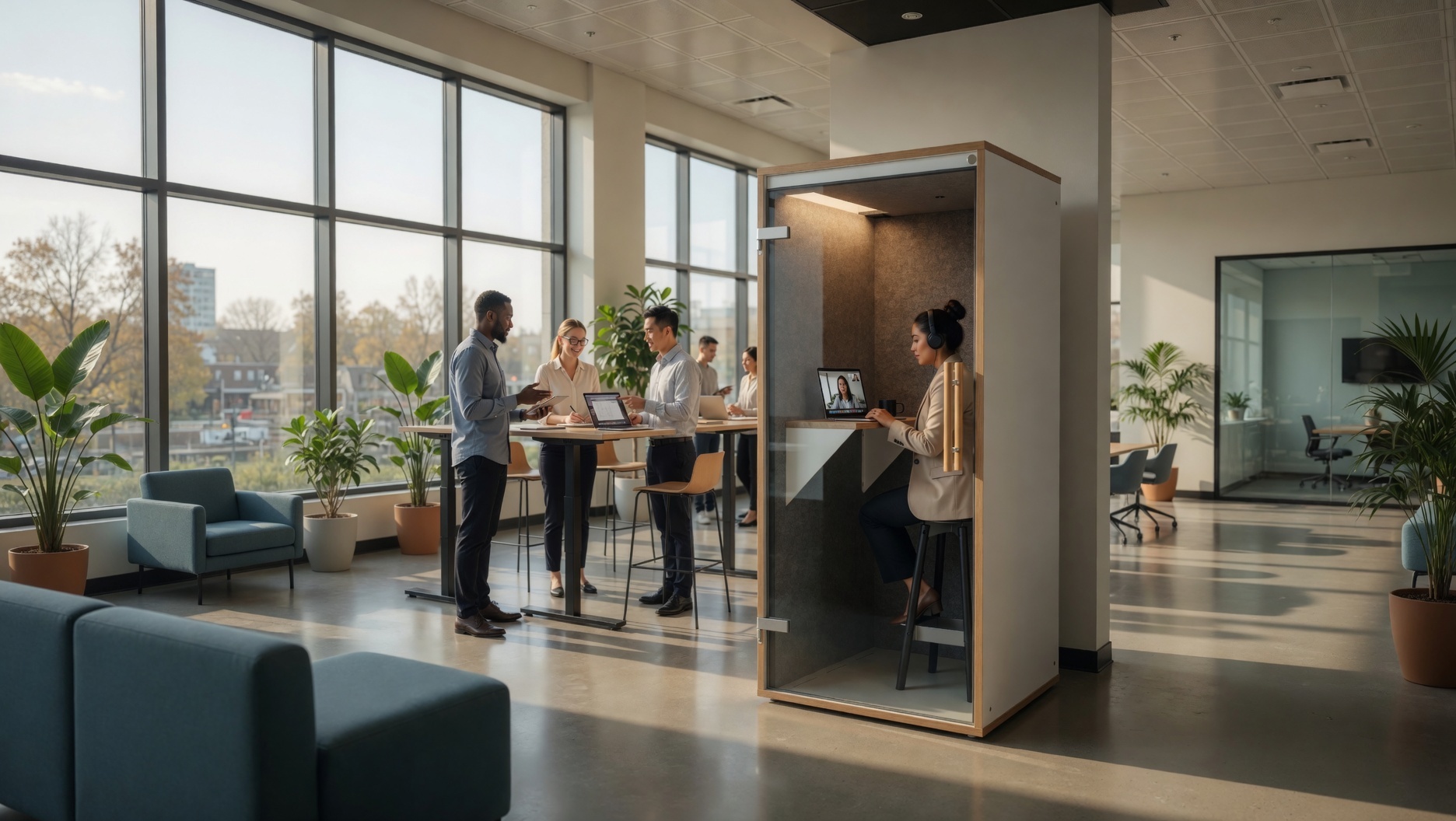
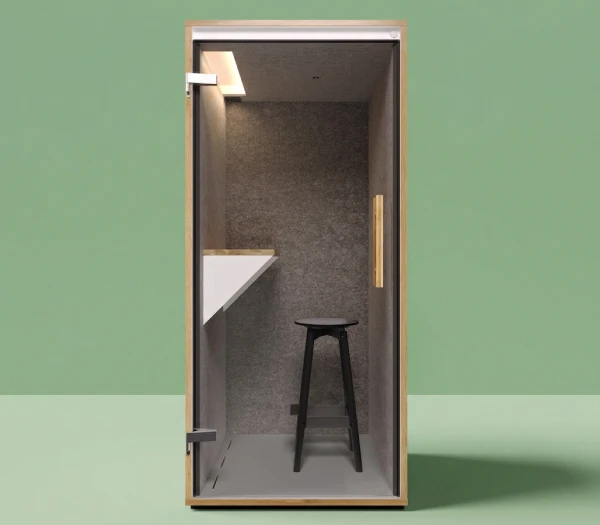
Often, targeted solutions are enough to remove the biggest friction points. Sound-insulated phone booths and meeting booths, for example, create exactly the types of spaces missing in everyday office life:
At the same time, they reduce pressure on open workspaces and minimize distractions for everyone else.


Many companies are currently discussing how to bring employees back to the office. But the more important question is:
How productive is the office environment itself?
Because when focused work is constantly disrupted by noise and interruptions, companies face real costs:
The problem is not the open-plan office itself.
The problem is that many offices lack the right retreat spaces.
Or put differently:
If companies want people back in the office, they also need to provide the conditions for productive work — otherwise the office costs more than rent alone. It also costs productivity.


Open-plan offices are designed to encourage collaboration, use space more efficiently and bring teams closer together. In reality, however, the opposite often happens: employees feel distracted, focused work becomes more difficult and productive working time is lost.
The numbers are clear:
This is not just frustrating — it is a real business cost.
Short conversations, spontaneous questions or calls at the next desk are part of everyday office life. The problem starts when interruptions become constant.
Especially in open offices, employees often lack the opportunity to briefly retreat. Conversations therefore happen directly at the workstation, video calls take place between colleagues trying to focus and quick alignments move into shared spaces.
The result: focused work becomes the exception.
Particularly critical is what is known as “flow loss”. When someone is pulled out of a focused work phase, it takes time to become fully productive again. This is where the real damage happens.
In addition, there is all the unnoticed time that disappears throughout the day. The impact on productive working time is substantial.
The effects also become visible when comparing office work with working from home.
This is a warning sign for companies. Because when employees need to work from home in order to be productive, the office loses its most important advantage.
At the same time, many companies are currently investing in smaller and more efficient office spaces. The problem: in many cases, the space is optimized — but not the working environment.
More people in less space automatically means:
Without suitable retreat spaces, pressure increases throughout the entire office.
Most open offices do not fail because of collaboration — they fail because of a lack of differentiation.
Employees need different spaces for different tasks:
And these are exactly the spaces that are often missing.
Employees most frequently mention the need for:
Without these options, every activity automatically shifts into the open area — creating even more distractions.
The good news: companies do not need to completely redesign their offices to solve this problem.
Often, targeted solutions are enough to remove the biggest friction points. Sound-insulated phone booths and meeting booths, for example, create exactly the types of spaces missing in everyday office life:
At the same time, they reduce pressure on open workspaces and minimize distractions for everyone else.
Many companies are currently discussing how to bring employees back to the office. But the more important question is:
How productive is the office environment itself?
Because when focused work is constantly disrupted by noise and interruptions, companies face real costs:
The problem is not the open-plan office itself.
The problem is that many offices lack the right retreat spaces.
Or put differently:
If companies want people back in the office, they also need to provide the conditions for productive work — otherwise the office costs more than rent alone. It also costs productivity.